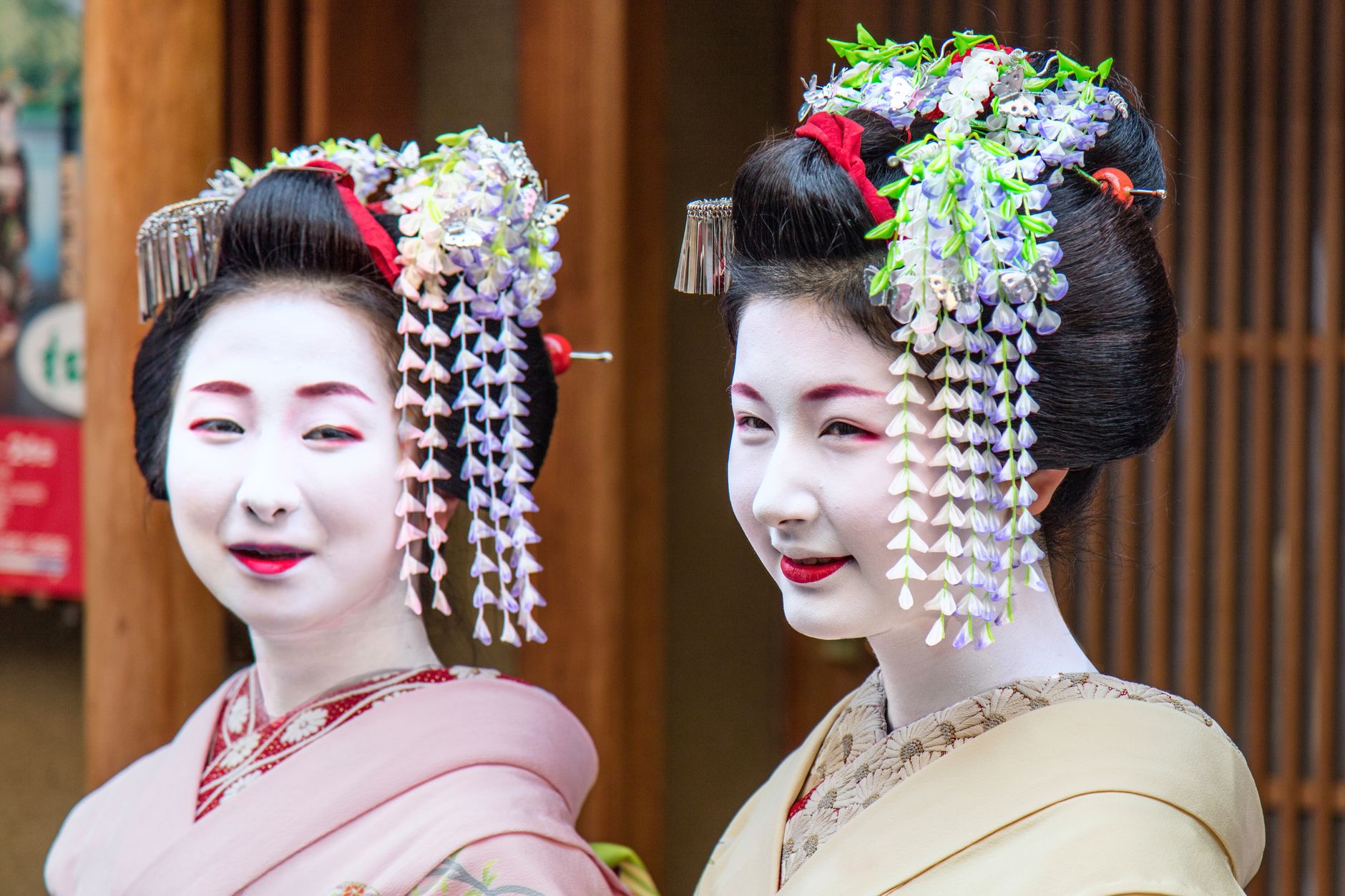
The Living Art of the Flower and Willow World
Walk through Gion's lantern-lit streets at dusk, and you might glimpse a figure in elaborate silk kimono, white-painted face catching the light, wooden geta clicking against stone. This is the karyukai, the "flower and willow world," Japan's traditional entertainment districts where geisha have preserved classical arts for over three centuries.
Yet for all their visibility, geisha remain profoundly misunderstood. Western media has often portrayed them as courtesans or exotic curiosities, missing entirely the rigorous artistic discipline and cultural preservation that defines their lives.
The Distinction: Geiko, Maiko, and Regional Terminology
In Kyoto, the term "geisha" is rarely used. Instead, fully trained artists are called geiko (literally "arts child"), while apprentices are maiko ("dancing child"). This Kyoto terminology reflects the city's position as the cultural heartland of the tradition.
A maiko's journey begins between ages 15-18, when she enters an okiya, a boarding house run by an experienced geiko. For five to seven years, she trains intensively in traditional dance, tea ceremony, flower arrangement, shamisen, singing, and the art of conversation.
Visual Language: Reading a Maiko's Appearance
Every element of a maiko's appearance communicates information. Her elaborate hairstyle changes as she progresses through stages of apprenticeship. Her kimono collar shifts from red (new maiko) to white (senior maiko). The famous white makeup serves both aesthetic and practical purposes, making faces visible in soft lamplight.
The Hanamachi: Geography of Culture
Kyoto maintains five hanamachi (flower towns), each with its own character:
Gion Kobu: The largest and most prestigious
Gion Higashi: Smaller and more intimate
Pontocho: Famous for riverside dining platforms
Miyagawa-cho: Known for youthful energy
Kamishichiken: The oldest district
Experiencing Geiko Culture Responsibly
For visitors, the geisha world presents an ethical challenge. Chasing geiko for photographs, blocking their path, or treating them as tourist attractions has created genuine problems. Respectful engagement is possible through proper channels—cultural organizations offer introductory experiences designed for visitors.
The karyukai has always evolved. Modern geiko navigate a world their predecessors could never have imagined, yet in the ochaya and at banquets, the traditional forms persist. What visitors experience in Gion today is neither a museum exhibit nor a tourist show but a living tradition.

