Architecture as Teaching
Buddhist temple architecture is never merely aesthetic. Every element carries meaning, arranged to guide visitors through a spiritual journey from the profane world to the sacred space within.
The Approach: Sandō and Sanmon
The journey begins on the sandō ("visiting path"), initiating psychological preparation. At the path's end stands the sanmon ("mountain gate"), the main entrance to the temple compound.
Within the sanmon stand the Niō, fierce guardian figures. Look closely at their mouths: one forms "a," the other "un"—together representing the Sanskrit "aum," the sacred syllable encompassing all existence.
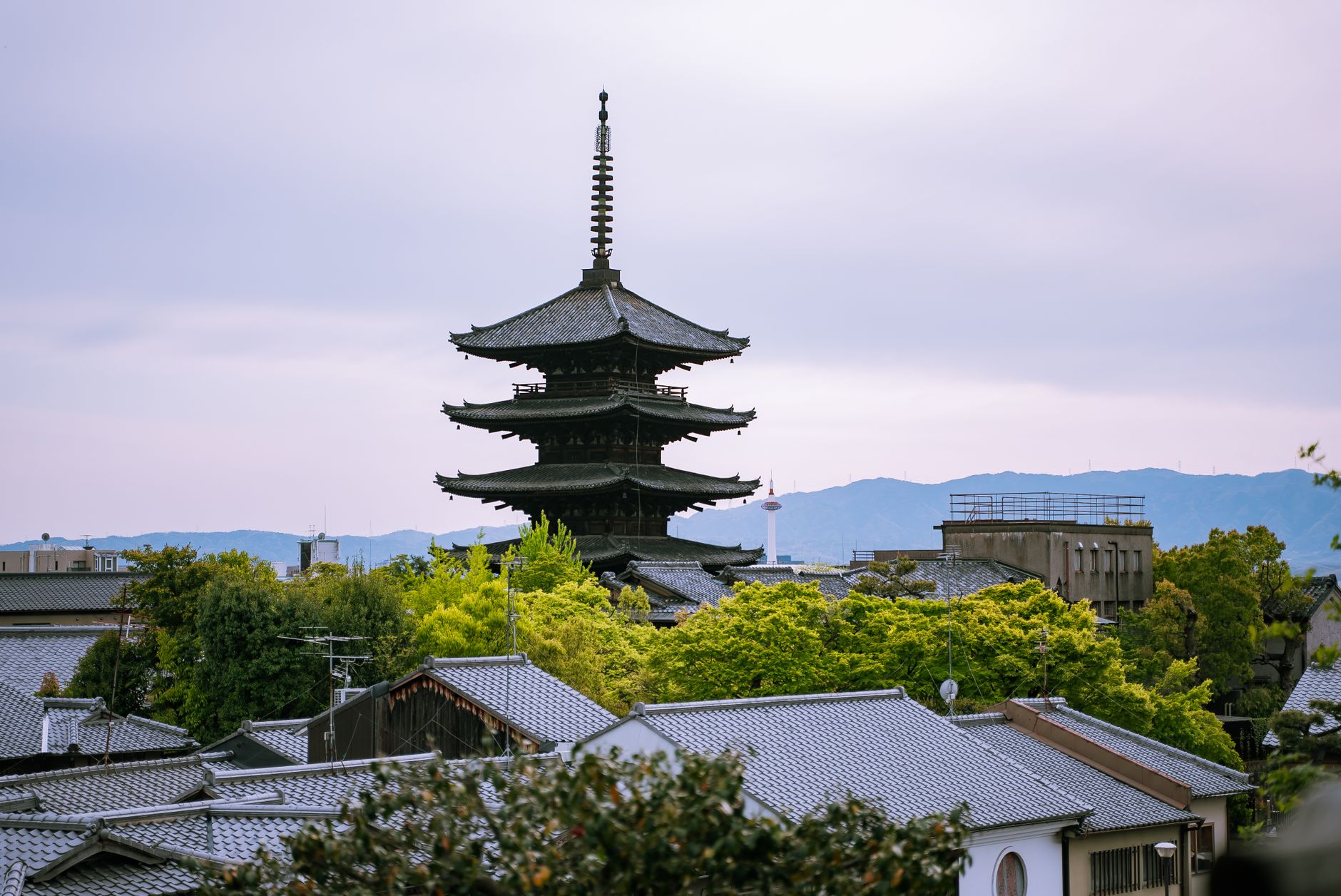
Pagoda Symbolism
Pagoda levels always number odd—three, five, or seven stories. Each tier represents an element:
Earth: The solid, stable foundation
Water: The cohesive, flowing quality
Fire: The transformative quality
Wind: The moving, expanding quality
Void/Sky: The encompassing emptiness
The progression upward mirrors the path from material existence to spiritual liberation.
Reading Buddha Images
Learn to recognize common figures:
Shaka Nyorai: The historical Buddha, in simple robes
Amida Nyorai: Buddha of Infinite Light, welcoming gesture
Yakushi Nyorai: The Medicine Buddha, holding a medicine jar
Kannon Bosatsu: Bodhisattva of Compassion, many forms
Garden Design: Philosophy in Landscape
The karesansui (dry landscape) garden uses white gravel and stones to represent ocean and mountains. Ryōan-ji presents the most famous example: fifteen stones placed so at least one remains hidden from any vantage point.
The point is not to "solve" the garden but to contemplate it. This is meditation made physical.

