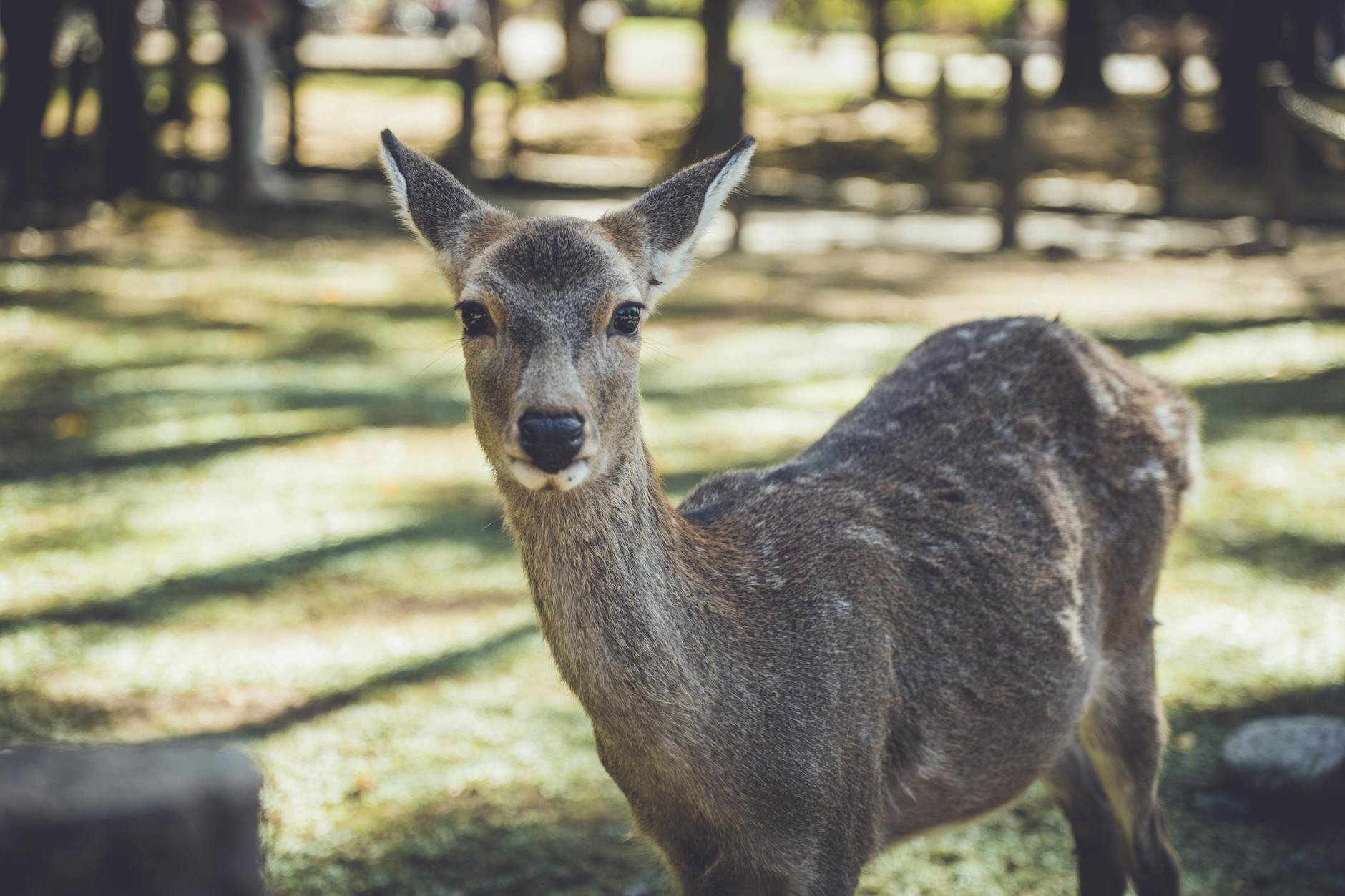
Divine Messengers
Walk into Nara Park and you'll be greeted by over 1,400 deer roaming freely among temples, tourists, and office workers. They're shika (sika deer), officially designated National Treasures.
The Legend of Takemikazuchi
According to Shinto tradition, when Kasuga Taisha shrine was established in 768 CE, the deity Takemikazuchi arrived riding a white deer. From that moment, Nara's deer became divine messengers, protected by religious law.
For centuries, harming a deer was a capital offense. Historical records document executions for deer killing into the Edo period.
Modern Status
Since 1957, the deer have been designated a National Natural Treasure. Today's population of approximately 1,400 is actively managed by the Nara Deer Preservation Foundation.
The Famous Bow
Nara deer have learned that bowing produces food rewards. Some researchers believe they learned this by observing humans bowing at shrines. Whatever the origin, deer now perform it routinely for crackers.
The Shika-Senbei Economy
Throughout Nara Park, vendors sell shika-senbei (deer crackers) at 200 yen per bundle. These rice bran crackers provide interaction opportunities without serious dietary impact.
Tips:
Purchase from official vendors (sales fund deer protection)
Feed one cracker at a time
Show empty hands when finished—deer understand
Never feed human food
Seasonal Considerations
Spring: Mothers with fawns can be protective
Summer: Deer seek shade and water
Autumn: Rutting bucks can be aggressive
Winter: "Deer gatherings" with supplemental feeding
The deer exist within a larger sacred landscape—neither fully domesticated nor truly wild, sustained by religious tradition adapted to contemporary circumstances.

