The Nation's Kitchen
Osaka's nickname, tenka no daidokoro ("the nation's kitchen"), reflects its historical role as Japan's commercial hub. The local expression "kuidaore" ("to eat oneself into ruin") captures Osakans' relationship with food.
The Holy Trinity
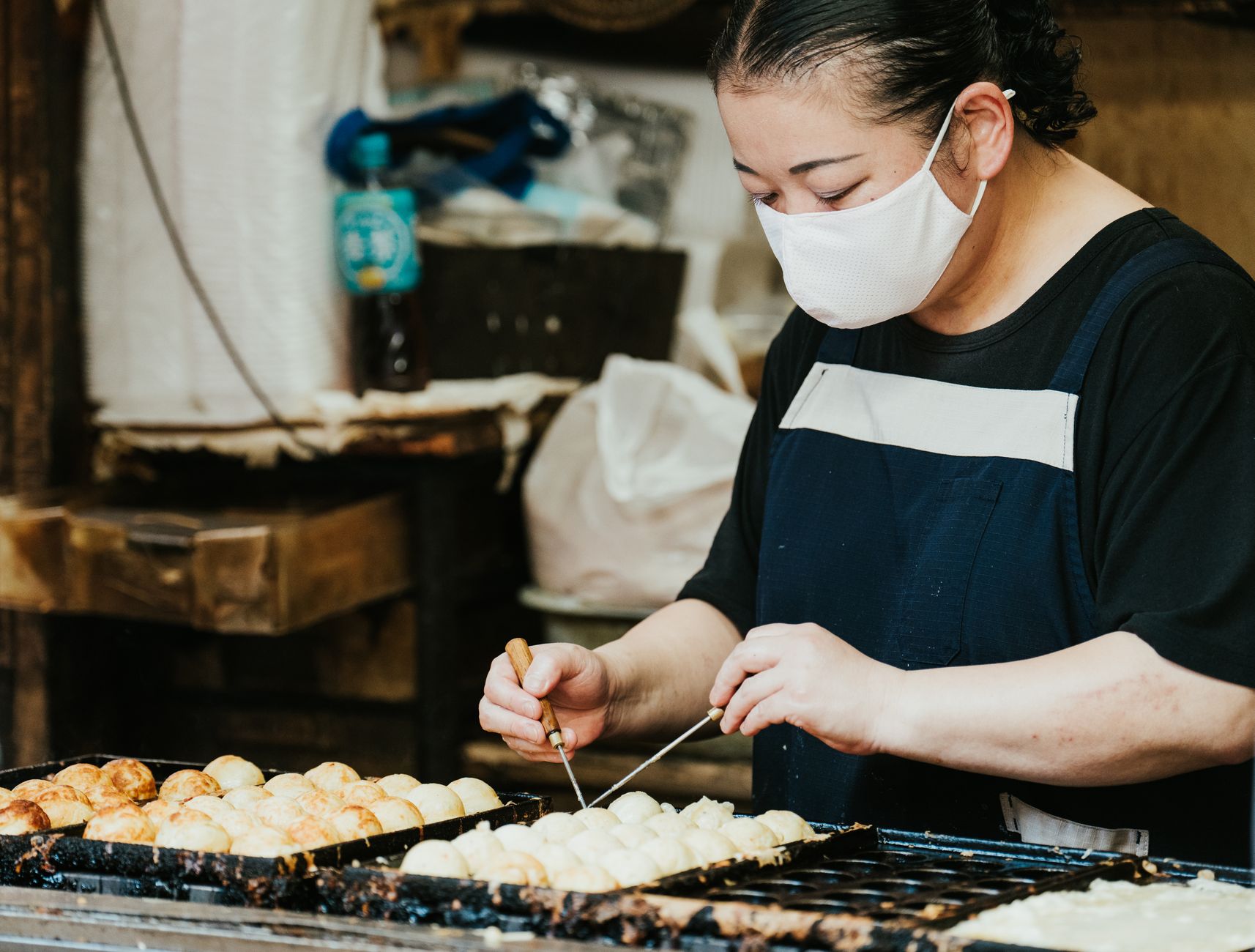
Takoyaki: The Perfect Street Food
Crispy outside, gooey inside, spheres of batter containing tender octopus, topped with sauce, mayonnaise, bonito flakes, and green seaweed.
Where to eat: Wanaka in Namba, Takoyaki Tamaya in Tennōji.
Okonomiyaki: The Savory Pancake
A thick pancake of batter, cabbage, and chosen ingredients grilled on a teppan. Osaka-style mixes all ingredients before cooking.
Where to eat: Mizuno in Dōtonbori (Michelin-recognized), Ajinoya near Shinsekai.
Etiquette: Don't press down with your spatula—this ruins the texture.
Kushikatsu: Deep-Fried Perfection
Skewers of meat, seafood, and vegetables deep-fried to golden perfection. The cardinal rule: no double-dipping in the shared sauce.
Where to eat: Shinsekai is the birthplace. Daruma is most famous.
Beyond Street Food
Kappo cuisine: Counter dining with elaborate seasonal menus
Fugu: Osaka has Japan's highest consumption of pufferfish
Kuromon Market: The professional's kitchen, 150+ vendors
Eating Etiquette
Cash culture: Many restaurants are cash-only
Counter interaction is expected
Lunch offers remarkable value
Note last-order times
The essence of Osaka food culture is abundance without restraint—pleasure pursued without apology.

