The Thundering Heart
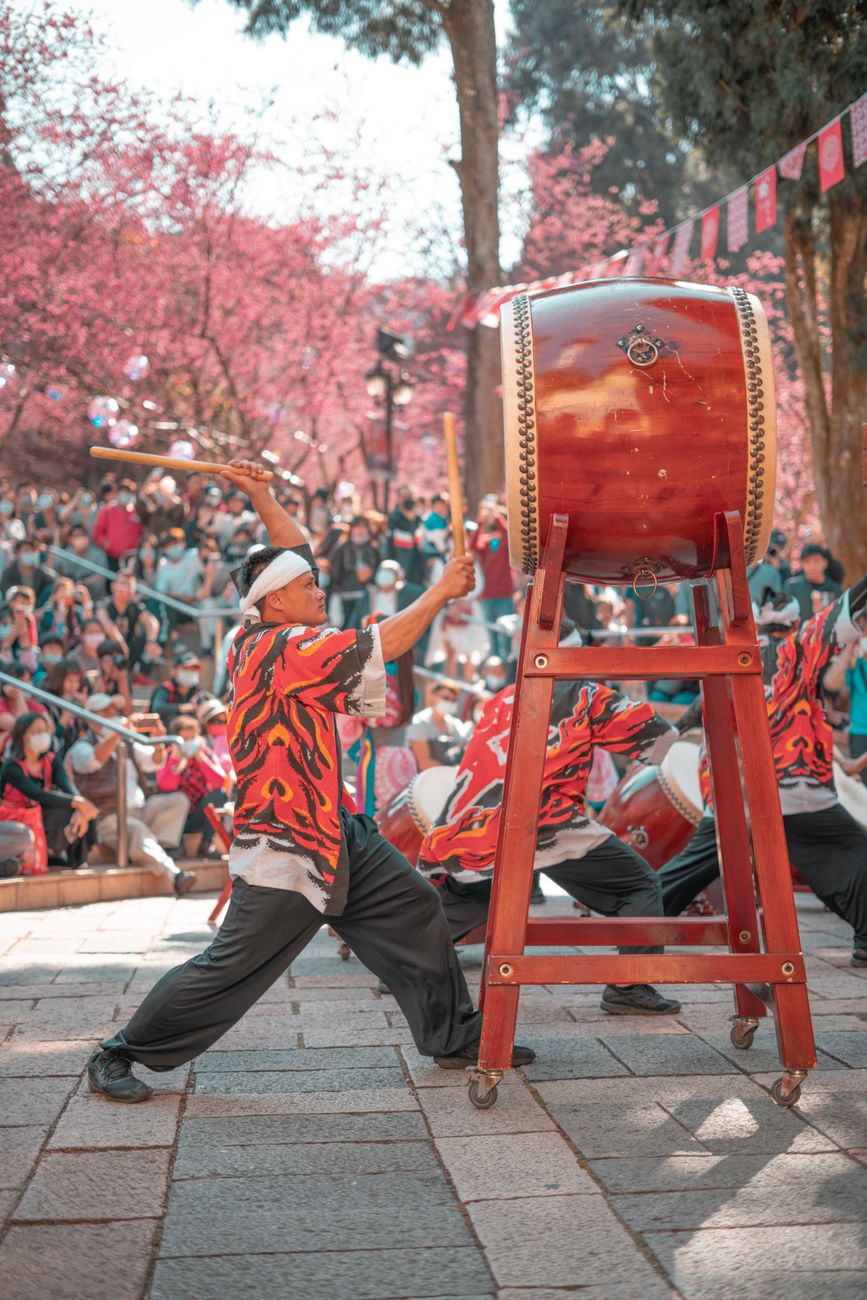
Taiko drumming is among Japan's most visceral arts. The massive drums, the athletes wielding bachi sticks, the physical intensity—it's music you feel in your chest before you hear it.
Ancient Origins
Drums appear in Japan's earliest records. They called communities to festivals, coordinated agricultural work, communicated across battlefields, and accompanied religious ceremonies.
But the theatrical taiko ensemble is surprisingly modern. Daihachi Oguchi, a jazz drummer from Nagano, created the first taiko group in 1951, arranging multiple drums for dramatic effect.
The Physical Art
Taiko is athletic performance. Drummers train their entire bodies—legs provide power, core maintains form, arms deliver strikes. Practice sessions resemble boot camp.
The posture matters: knees bent, back straight, arms moving from the shoulder. The sound comes not from hitting hard but from striking correctly. Beginners make noise; masters make music.
Major Traditions
Osuwa Daiko: The first modern ensemble, still performing
Ondekoza: Founded 1969, known for extreme physical training
Kodo: Former Ondekoza members, based on Sado Island
Gocoo: Tokyo-based group mixing traditional and contemporary
Experiencing Taiko
Watch live performances when possible—recordings can't capture the physical impact. Many cities have taiko groups offering workshops for visitors. The Kodo festival on Sado Island each August draws enthusiasts worldwide.
Even a single lesson reveals why practitioners become devoted. The sound, the physicality, the group coordination—taiko offers something rare: an art form that's simultaneously ancient and immediate.

