A Monument to Imperial Ambition
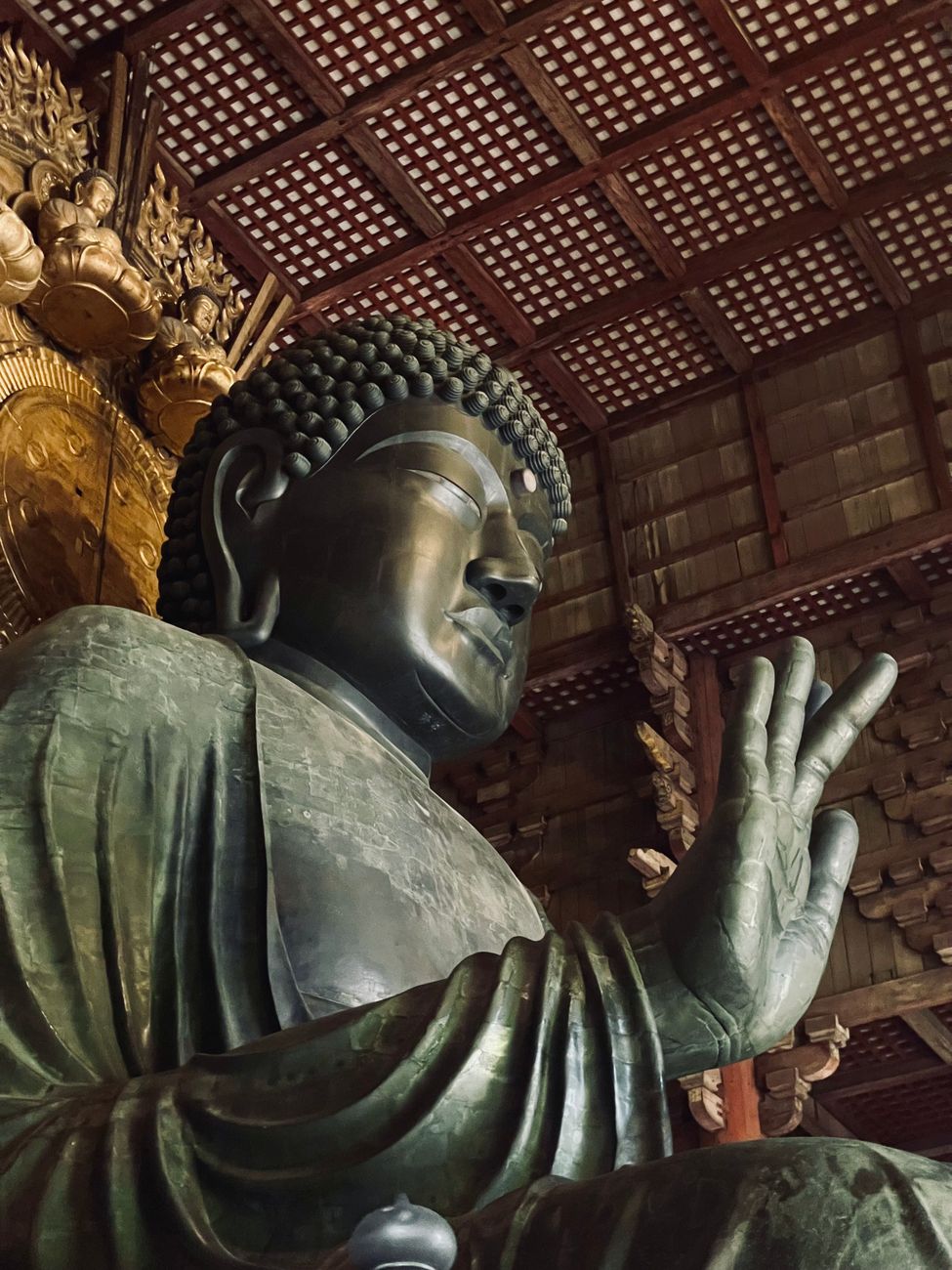
The Great Buddha of Nara sits in eternal meditation within the largest wooden building in the world. At 15 meters tall, cast in bronze in the 8th century, this colossal image represented the most ambitious religious project in Japanese history.
Emperor Shōmu's Vision
Emperor Shōmu (701-756) ruled during crisis: smallpox epidemics, political intrigues, natural disasters. In 743, he called for the construction of a Great Buddha representing Vairocana, the Cosmic Buddha whose light illuminates all existence.
The Engineering Challenge
Creating this statue pushed 8th-century technology to its limits: approximately 500 tons of bronze and 440 pounds of gold. Mercury used in gilding reportedly sickened many workers.
The casting required eight attempts over several years. When complete in 752, the dedication ceremony drew dignitaries from across Asia. The emperor himself painted the Buddha's eyes in the consecration ceremony.
Survival and Reconstruction
The original temple burned twice—in 1180 and 1567. Each destruction required massive reconstruction efforts. The current hall, though the world's largest wooden structure, is actually 30% smaller than the original.
The Buddha itself has been repaired repeatedly. The current head dates to the Edo period; the body preserves elements from multiple eras. These repairs aren't seen as diminishing authenticity but as continuous renewal.
Experiencing Tōdai-ji
Enter through the massive Nandaimon gate with its ferocious Niō guardians. The approach builds anticipation—you see the hall's roof above the trees before you see the building itself.
Inside, the scale is overwhelming. The Buddha sits in meditation, right hand raised in the "fear not" gesture. Around the hall, smaller statues and historical artifacts provide context.
Don't miss the pillar with a hole the same size as the Buddha's nostril—crawling through is said to grant enlightenment in the next life.

